02 Jul 2026
❄️Cool down your home with domestic air conditioning installation from BHE
Stay cool and comfortable during warmer months with domestic air conditioning installation by BHE’s trusted engineers in Wigan and Leigh. ...
Read more

400+ 5 STAR reviews on Google in Morecambe & Bolton!

19 Mar 2026
Appliances powered by LPG, or Liquefied Petroleum Gas, play a big part in heating and cooking in many homes and other busy, well-used places, such as holiday flats, cottages and caravans.
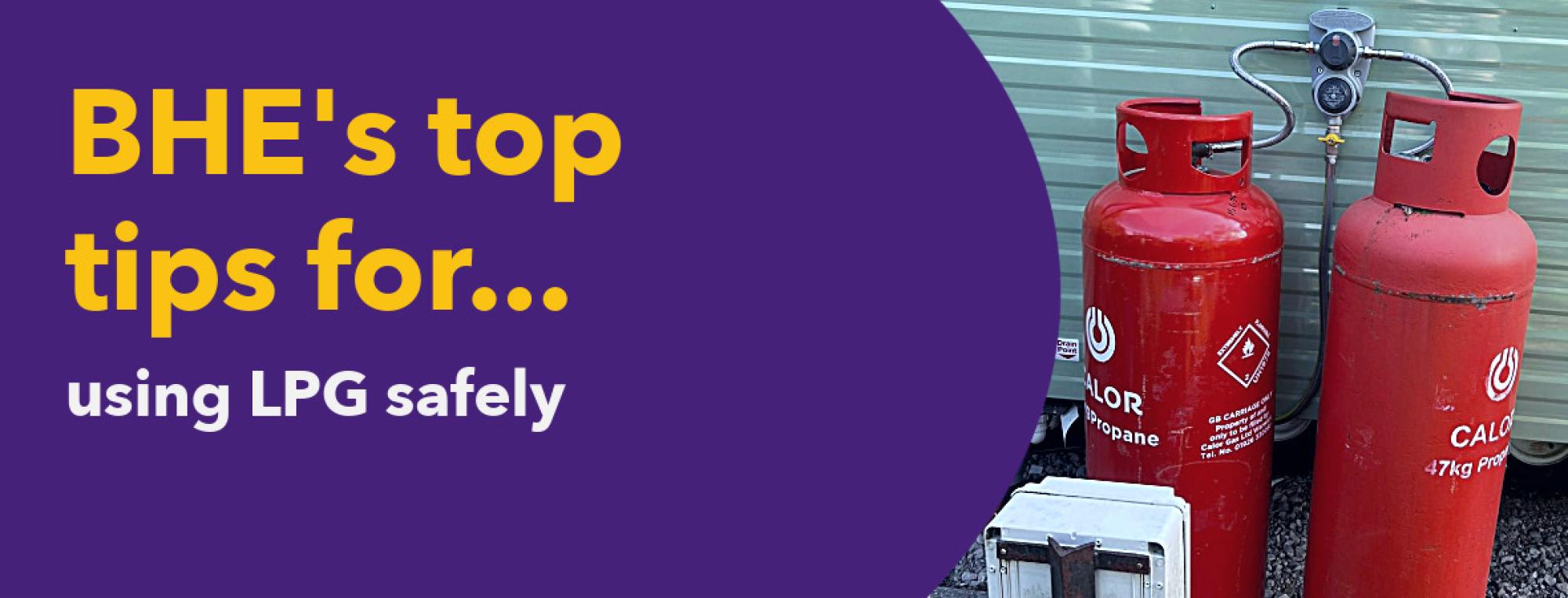
BHE explains how to care for LPG appliances & how to use LPG safely at home & on holiday.
LPG can power individual appliances, or be used to generate enough power to operate a number of appliances, in a small property such as a static caravan. It is also a popular choice of fuel in locations where there is no mains gas supply, for example when camping in the great outdoors!
The gas is commonly stored in a liquid form in metal bottles, which can be directly connected to an individual appliance, or to an individual caravan’s or property’s gas system. In turn, this feeds fuel to gas-powered heaters or cookers, giving the warmth and comfort of home in often the most remote areas.
But if you use this type of power, there are a few secrets to using LPG safely that you will need to know. We’ll explore them in this article, with the help of Liquid Gas UK, the trade body representing companies which supply more than 99% of the renewable gas used in the country, along with bodies training plumbers and heating engineers who install fixed LPG-powered appliances.
Follow the pointers below, and you’ll be equipped with everything you need to know for using LPG safely, helping you get the most from this versatile fuel. And before heading off, you can always ask us here at BHE for relevant and up-to-date advice which can help keep you safe.
Three million LPG bottled gas heaters are believed to be in use in the UK, making them a popular heating source since the early 1970s.
Liquid Gas UK notes that there is usually very little risk to using them, provided the space where they are sited is well ventilated, as this will allow the small amounts of carbon dioxide they produce to dispel naturally.
A bigger risk in using LPG safely with bottled gas heaters is presented in the water vapour which can be given off, as this can form damp patches if it isn’t allowed to escape. However, a bottled gas heater can help clear a temporary damp problem, provided the area affected is always kept well ventilated. Bottled gas heaters are also useful in helping clear damp from external adjoining walls in a room which does not usually suffer from a damp problem.
BHE’s local gas engineers in Wigan, Leigh, Lancaster and Morecambe are happy to check over and service your gas heater and its LPG supply, identifying any issues such as signs of corrosion early which will help to prevent serious problems later.
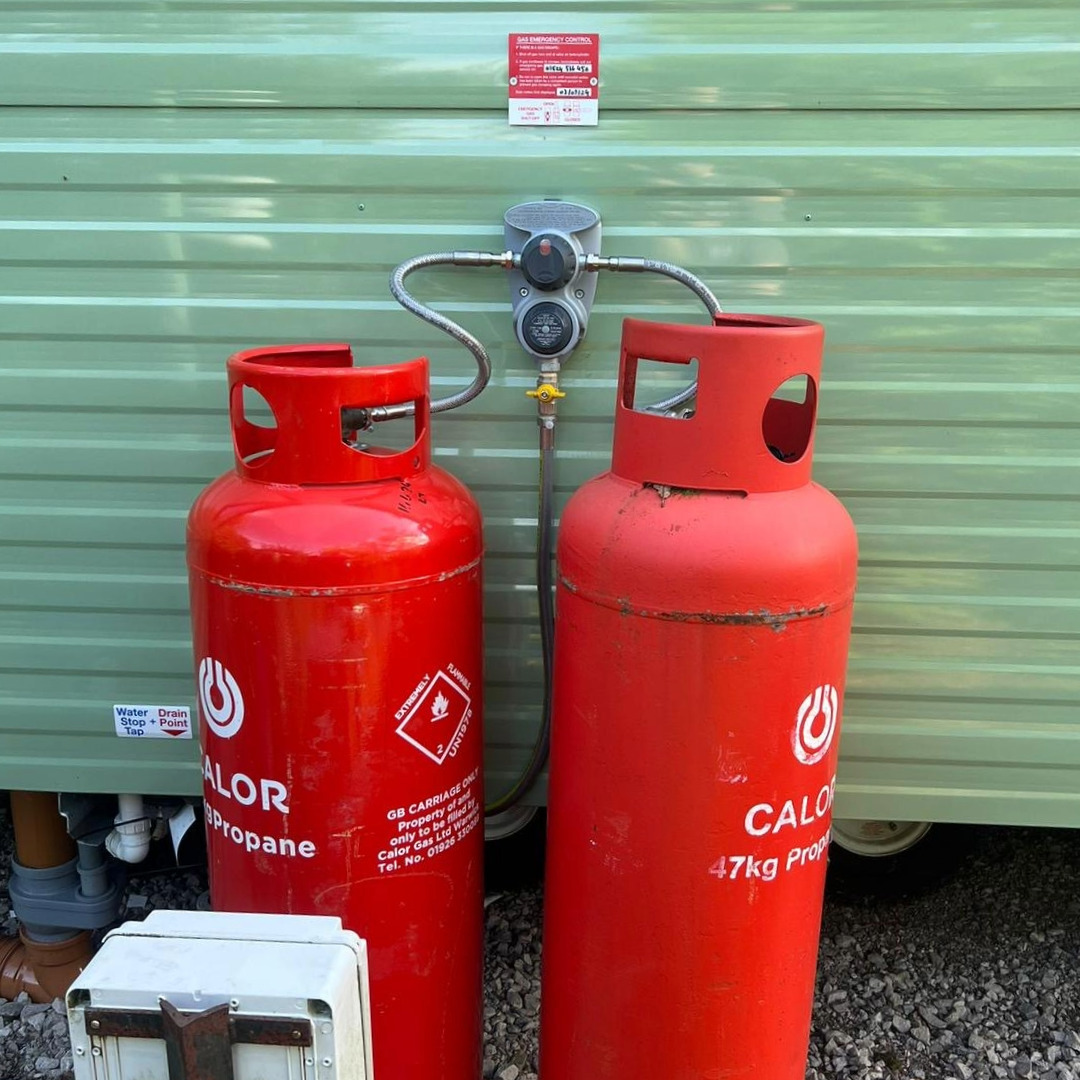
Two LPG canisters installed at a caravan park in Morecambe by BHE engineers, helping to fuel heaters and cookers for families to enjoy while on holiday.
Propane, which is one type of LPG, cannot be used indoors in the UK. However, butane-fuelled heaters can be used. In order to promote using LPG safely indoors, distributors of gas heaters in the UK are encouraged to attach a note to their appliances specifying that, under Liquid Gas UK guidelines, only butane gas cylinders should be used to fuel them.
If you’re using an LPG appliance with instructions that suggest that you can use propane gas to power it, the UK Health and Safety Executive strongly recommends that you disregard this and only use butane. Not sure whether you can use your LPG cylinder indoors safely? BHE’s LPG-accredited engineers are on hand to check over your appliances, your cylinders and to give you advice about the safe use of LPG indoors.
As with all other similar appliance types, provided strong guidelines on using LPG safely are carefully followed, patio heaters can be a safe source of heat for suitable small outdoor spaces.
Patio heaters can produce very intense heat, and we recommend ensuring that the surface of your patio heater is kept well away from any flammable materials, such as a canopy, awning or umbrella. Stand your patio or outdoor heater in a well-sheltered spot, and avoid moving a patio heater once lit.
It’s important that air can flow freely around your LPG patio heater, as the draught will help to avoid any build-up of potentially dangerous gases.
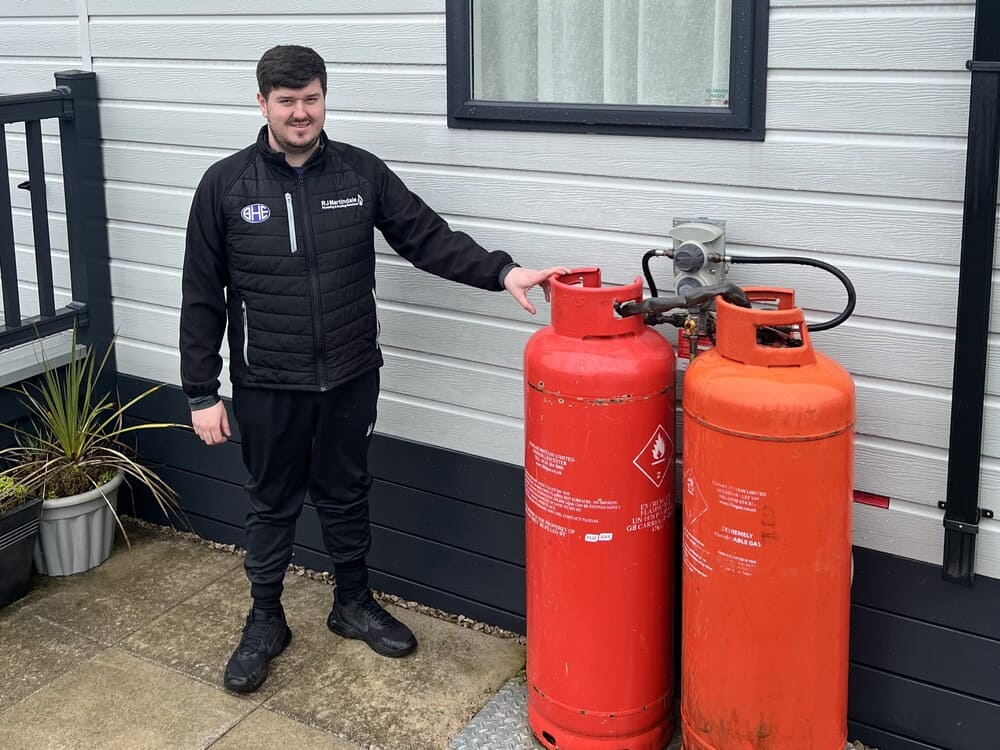
BHE engineer, Connor, professionally installs two LPG canisters at a holiday home in Morecambe, helping tourists and holiday-goers to stay warm during the cold evenings.
LPG is highly portable, and incredibly convenient when camping or travelling in a motorhome or caravan. Just make sure that you always have the landowner’s permission to set up camp and use your equipment.
If you’re setting up outside, and using LPG as a fuel or heat source, be sure to:
And a few don’ts:
BHE’s team of gas engineers in Wigan, Leigh, Lancaster and Morecambe has over 50 years’ experience in caring for gas appliances, equipment and heating supplies in homes and holiday homes with outstanding customer service.
Fully trained and accredited to work with LPG supplies, our engineers professionally service, repair and care for LPG heating and other systems across the North West.
Don’t take any guesses with gas! Access on-the-spot help and advice from our LPG engineer team to safely protect your home or holiday home with professional LPG gas safety expertise that’s trusted by hundreds of North West homeowners and investors.
02 Jul 2026
Stay cool and comfortable during warmer months with domestic air conditioning installation by BHE’s trusted engineers in Wigan and Leigh. ...
13 May 2026
With summer quickly approaching, having a reliable water supply outside is essential for the average UK household, especially if you're somebody who loves to enjoy and maintain their garden....
27 Apr 2026
LPG, or Liquefied Petroleum Gas, is widely used as a fuel in many situations where there is no mains gas supply, or to supplement this in appliances which often only see temporary use, such as portabl...
2026© B.H.E. SERVICES (BOLTON) LIMITED. Privacy Policy | Cookie Policy | Website Terms of Use | Sitemap
